Wednesday, July 17, 2013

England - still green and pleasant...

The 'green and pleasant land' of William Blake's poem describes an England 200 years ago, before industrialisation transformed a predominantly rural, agricultural economy into the urbanised, global marketplace of today. With over 53 million people and a population density of almost 400 per sq km, much of the landscape, especially in towns and cities, is no longer green. And the seismic social and economic upheavals of the last two centuries have resulted in aspects of contemporary society that are not particularly pleasant.


Almost everything you read about British wildlife confirms that it's in trouble.  Changing weather patterns, habitat destruction, persecution of native mammals, introduction of exotic species, air pollution and contamination of the waterways have all disrupted the ecological balance and contributed to the decline in bees, frogs, newts and many bird species.  During a three week visit to my home country, however, I found wonderful and inspiring things that gave me reason to hope for the future.
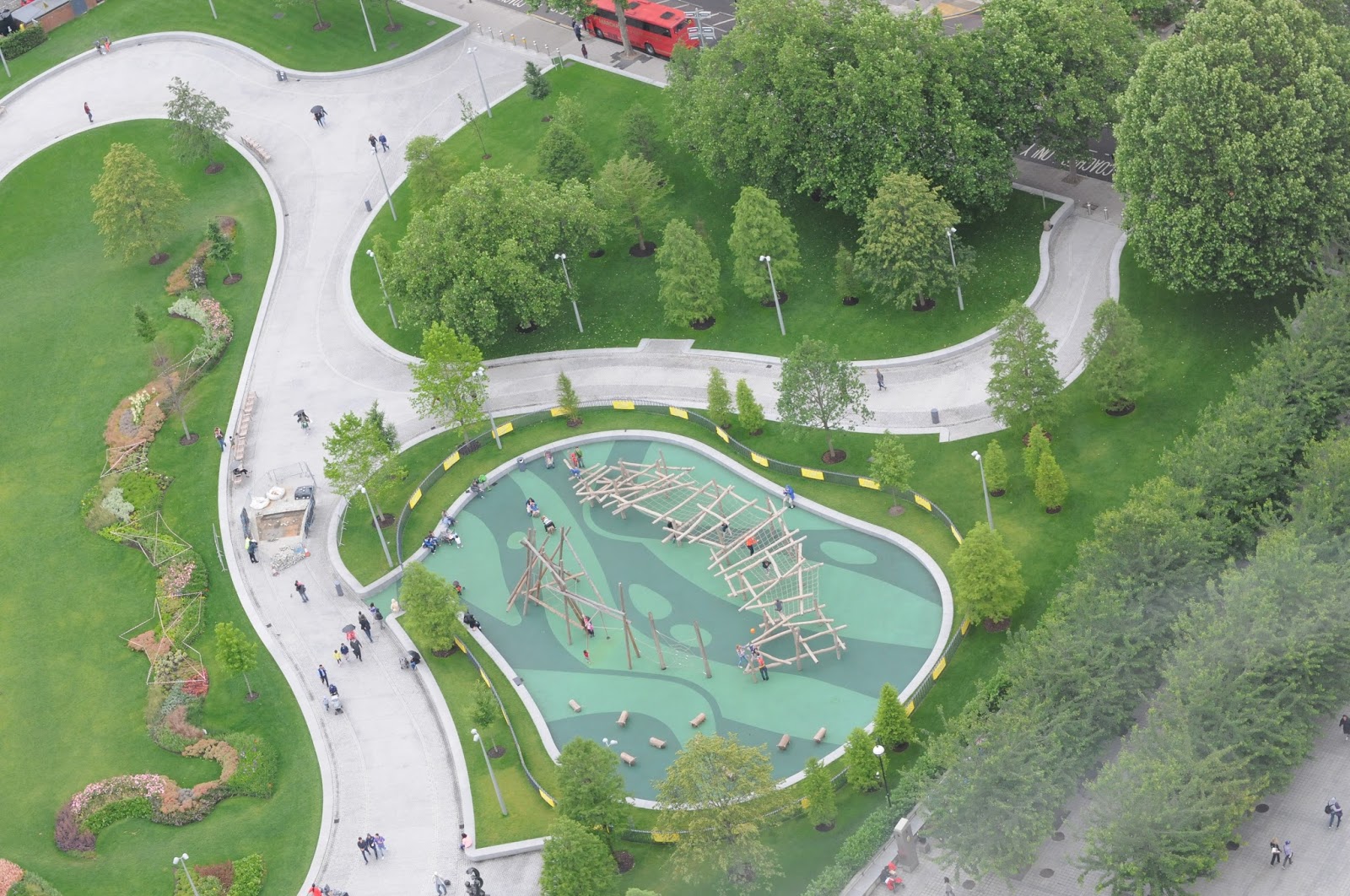


Important work is being done all around the country to preserve and restore habitats for wildlife. The once biologically dead River Thames is now one of the cleanest metropolitan waterways in the world, home to around 120 species of fish and, with them, waterbirds.  At Canary Wharf, for example, we saw a family of Great Crested Grebes, a species that was once hunted almost to extinction for its elaborate head plumage.


At Brockholes, in Lancashire, a disused sand and gravel quarry is being transformed into wetlands that will provide an important sanctuary for resident and migratory birds.  One of the priorities is to recreate some of the area's old landscapes, in particular reedbeds.  The hope is that these will provide habitat for spectacular - but threatened - plants and animals, including marsh orchids, Reed and Sedge Warblers, Bittern, Bearded Tits, Marsh Harriers and Water Voles.


I spent my childhood and adolescence in Preston, in North West England, where the decline of the textile industry from the mid-20th century brought hardship and the dilapidation of housing and commercial buildings. As the city struggled to reassert itself in the post-industrial era, large areas of rural land were used to replace the high density Victorian terraced housing and crumbling concrete housing blocks that once dominated the city centre.  The good news is that with sensitive city planning, involving preservation of ancient woodlands and extensive tree planting, wildlife continues to thrive, even in this most urban of environments. 


Adjacent to our family home, for example, there's an ecologically significant ancient woodland, that's now protected as a Biological Heritage Site. In the past, much of England was covered with these 'wildwoods' which, according to legend, provided refuge for Robin Hood and his band of merry outlaws. With urbanisation and population growth, however, they now only account for around 1.5% of the country's land surface.


Because of their long, continuous history, ancient woodlands support many native plants and animals, some of which are only found in these habitats.  I went walking in the woods many times during my visit and was struck by the variety of mature trees - oak, sycamore, beech, wych elm, ash, wild cherry and lime - that provide a dense, complex canopy for the understorey and groundcover species.  On the dark, damp forest floor, it feels like you're in the rainforest.  And there were so many birds - nuthatches, robins, woodpeckers, blue-tits, jays, blackbirds - busily occupied in the race to give their families the stamina to survive the bitterly cold, hard winter months.


In response to a challenge by the Independent Panel on Forestry, the UK Government recently asserted that: "Protection of our trees, woods and forests, especially our ancient woodland, is our top priority."  Considering how rare and precious these forests are, and their ecological importance, let's hope the Government fulfils its promise.

Monday, June 10, 2013

Global Hunger - Small Steps that make a Difference

There’s enough food in the world for everyone, yet almost 870 million people go to bed hungry every night.  It’s estimated that 2.3 million children die unnecessarily from malnutrition every year and that many more have their health and potential damaged by lack of food and micronutrient deficiencies in early life.

At the same time, obesity is increasing rapidly in all societies and has almost doubled since 1980.  According to the World Health Organisation, 1.4. billion people are now overweight, due to sedentary lifestyles and diets shifting towards high-fat, high-sugar, high-salt, micronutrient-poor foods. 

According to a recent report commissioned by the Hunger Alliance, the most important thing that governments can do to reduce global hunger is to support the millions of smallholders in developing countries who are struggling to feed themselves and their families. The report’s central findings are that to have the greatest impact, investments should:
  • Empower small-scale farmers, particularly women.
  • Promote environmentally sustainable small-scale farming, including home gardens, small scale livestock and fish rearing.
  • Complement agricultural programmes with education about nutrition, health services, clean water and sanitation.
"Tackling female disadvantage in agriculture is the 'game changer', and this can be achieved by ensuring access to land for women in national laws and through recognition of collective rights to grazing, firewood and water.  Addressing inequalities in women's access to education, credit, local markets and extension services are vital, too"


Global hunger is clearly a very big problem and, as individuals, we can often feel powerless.  The good news is that there are important, practical ways in which we can all make a difference:
  • With a federal election in September, there’s no better time to let both the Government and Opposition know that we care about this issue. As part of the Grow a Better Future Campaign, Oxfam Australia has drafted a letter to the Foreign Minister and Shadow Foreign Minister asking them to double the amount of aid towards supporting small-scale food producers; all you need to do is complete your name and contact details.  
  • Next time you're having a birthday or other celebration, help support Oxfam Australia's life-changing work around the world by using Oxfam Unwrapped.  Instead of giving you a present, ask your friends and family to give a chicken, a veggie garden, literacy classes, a mosquito net or even cattle manure(!) for someone who really needs it.


  • Become a lender to low income smallholders in developing countries through Kiva.org.  To find out how Kiva works, follow the story of Pedro, a farmer who gets a loan through Kiva.org and transforms his business.


  • If you can, make a donation to support the excellent work of one of the organisations working to alleviate poverty in the developing world. 
    • A gift of $48 to Care Australia's Hunger Appeal will provide a mother with the knowledge, skills and tools to feed her children.
    • A monthly donation of $25 - less than a dollar per day - will help WaterAid Australia to transform lives through clean water, adequate sanitation and education about hygiene.
    • Sponsoring a child with ActionAid Australia for under $10 per week creates a better future for your sponsor child, their family and their whole community.  It also gives your own children the chance to connect with another child whose situation and opportunities are likely to be very different from their own.


Saturday, June 8, 2013

Take the GROW Challenge


Oxfam Australia has launched a six month campaign - The GROW Challenge - to promote sustainable and fair eating to help ensure that everybody has enough food, always.  

One in eight people in the World goes to bed hungry every single night. That’s 870 million of us.
And that’s not right.


The Grow Method is a better way of thinking about food – how we buy, prepare, eat and dispose of it.  Signing up to the GROW Challenge involves making commitments to:

This month's challenge is to support small scale farmers by visiting a local farmer's market or community market, taking a photo of yourself or your friends and posting it on Oxfam Australia's Facebook page.


Friday, June 7, 2013

Beachology

'Beachology' is a marine ecology education program designed by Griffith University to encourage children to see the beach as more than just a playground.  The aim is to teach kids about the coastal environment, the plants and animals living on the beach and their importance to the ecosystem. 


The marine biologists who run Beachology workshops have a wonderful way of making a complex subject interesting and accessible to young children.  


Workshops are fun and interactive. Our kids love the activities, which include walking along the beach hunting for treasure...


Sorting & classifying marine organisms, into animals, plants, rocks, shells...


And, unfortunately, RUBBISH!!


One of the highlights of the program is sampling for marine worms & crustaceans in shallow water along the shoreline...


And using a pipette to place delicate animals into a petri dish, then checking them out in all their detail under the beach microscopes.


Beachology workshops are free and are held on Gold Coast beaches several times throughout the year.  To find out more and join the mailing list, check out the Griffith University Centre for Coastal Development website or contact marine biologist and program co-ordinator Deborah Duncan on 0419 449 454.

Thursday, June 6, 2013

Food Waste Challenge

This week's challenge is to eliminate all of our organic food waste from the rubbish bin. In Australia, 50% of household waste and 30% of all the waste we throw away is organic.  This is harmful to the environment because when organic waste breaks down in landfill sites, it produces: a) methane, which is a potent greenhouse gas; and b) acids, which leach into the earth and contaminate groundwater.

Elimination of food waste can be done by:
  • Reducing the amount we produce;
  • Feeding leftover food to the chickens and worms as appropriate;
  • Disposing of all other food waste (in our household, mainly citrus peel, onion and avocado skins, egg shells, bones and bread) in a Bokashi bin. The pickled contents can be added to compost or buried in the garden when it's full.

Wednesday, June 5, 2013

We've done it!!

For the past two weeks, we've reduced our kitchen waste to half a small bag per week. That's a significant change for us and was very easy to achieve. 

Everyone in the family has been enthusiastically involved. Recycling even featured in the list of 'challenges' the children set for themselves... along with DON'T BOUNCE THE BALL IN THE HOUSE!


Friday, May 24, 2013

Recycling Challenge

This week, we've set ourselves the challenge of reducing the amount of waste we produce to one small bag of rubbish per week. The aim is to:
  • Avoid the accumulation of waste;
  • Recycle 95% of food waste through the chickens and worm farm;
  • Recycle all hard plastic, paper, cardboard and aluminium by placing it in the household recycling bin provided by Gold Coast City Council;
  • Recycle all soft plastic by placing it in the Coles supermarket recycling bins.
The Coles supermarket scheme is worth a special mention. They've got together with recycling company RED Group and manufacturer Replas to turn plastic bags and packaging into outdoor furniture for Australian pre-schools and primary schools. What a great idea!!!